Topic 2: Understanding Road Reconstruction
When a road needs work, it may seem simple: identify the roads in the worst condition and fix them. In reality, roadway improvements are part of a much larger process, with a variety of factors contributing to how projects are planned, prioritized, and completed.
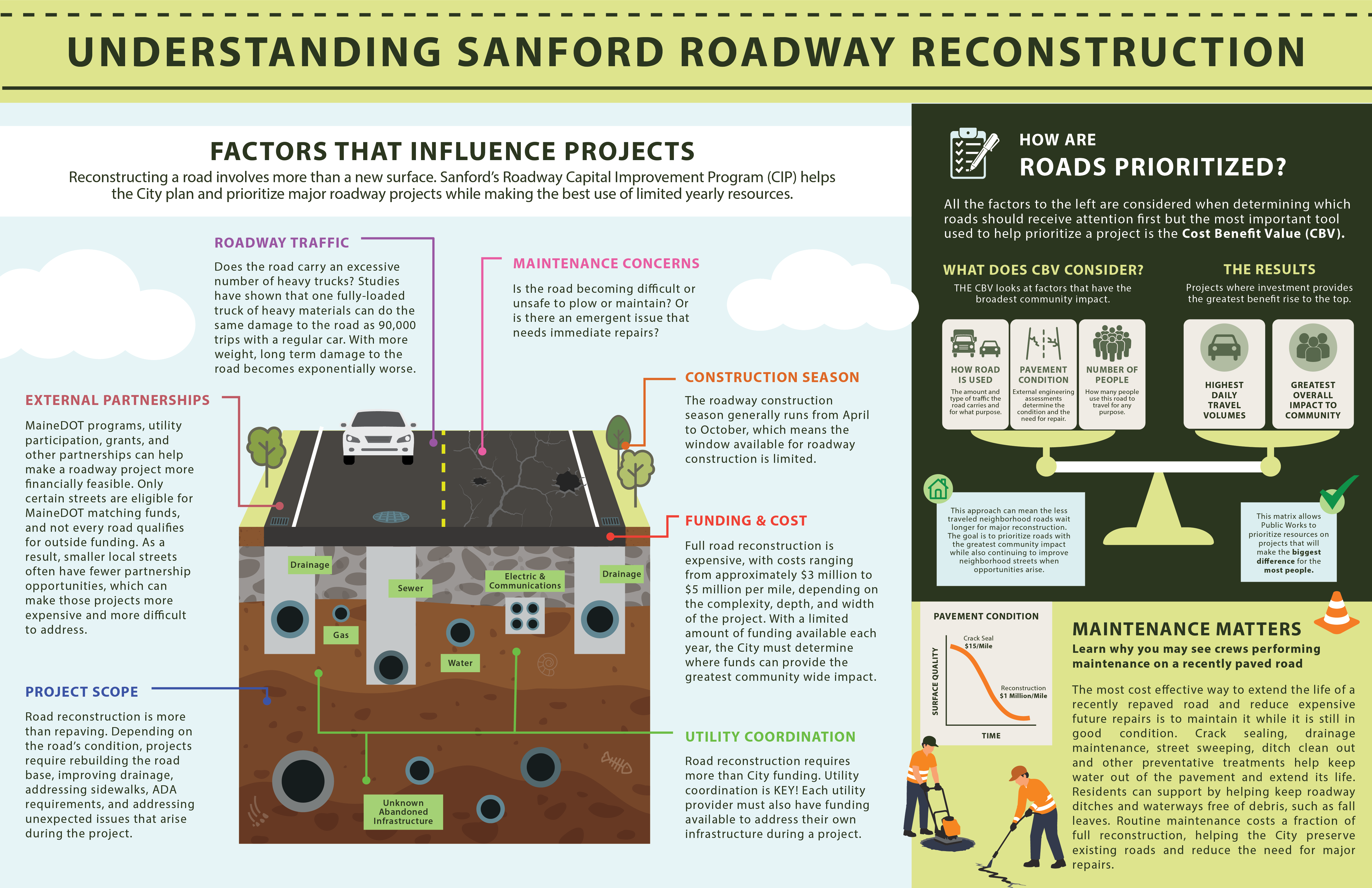
The graphic below takes a closer look at how the City plans and prioritizes major roadway projects through the Roadway Capital Improvement Program (CIP). It explains the factors that go into determining when and how a roadway project moves forward, including roadway condition, Cost Benefit Value (CBV), traffic volume, project costs, and available funding. The graphic also highlights the importance of maintaining roads while they are still in good condition to help extend their lifespan and reduce the need for costly reconstruction.
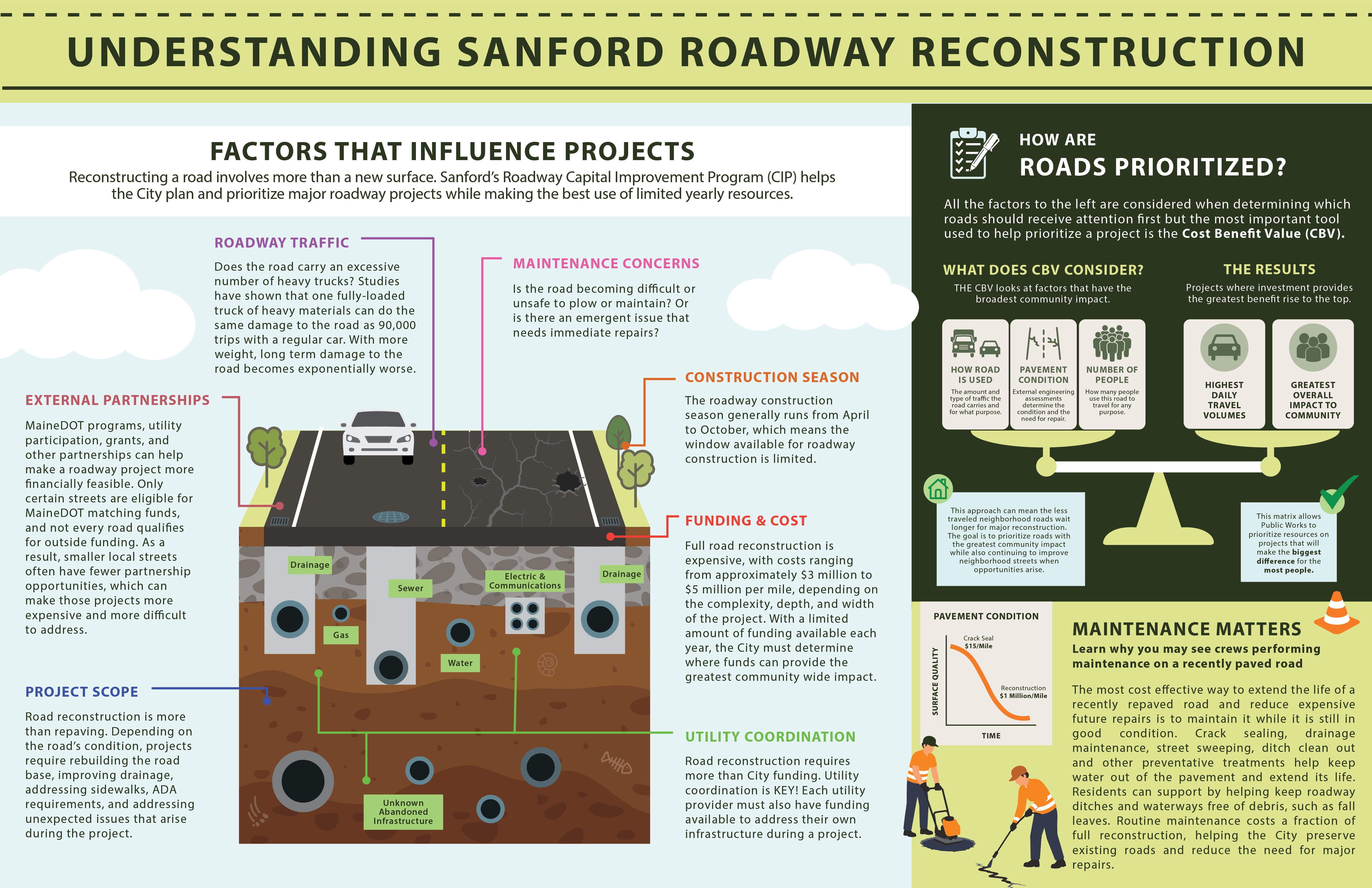
(Click on Image Above to View in a Larger PDF Format)
Public Works Capital Improvement Program
For the City of Sanford, roadway improvements are managed through the Roadway Capital Improvement Program (CIP), which helps the City plan and prioritize major roadway projects over several years. To help guide future projects, the Public Works team maintains a list of streets in need of attention. This list is updated periodically as road conditions, priorities, and funding opportunities change.
What Factors Contribute to a Road Reconstruction Project?
Unfortunately, a road being in poor condition does not automatically mean it will be the next road reconstructed. There are many factors that contribute to when and how a roadway reconstruction project can move forward.
- Construction season is one consideration. In Maine, the roadway construction season generally runs from April to October, which means the window available for roadway construction is limited.
- Funding is another major factor. Road reconstruction is expensive, with costs ranging from approximately $3 million to $5 million per mile, depending on the complexity, depth, and breadth of the project. With a limited amount of funding available each year, the City must determine where those dollars can have the greatest impact.
- Additional external funding through MaineDOT programs, utility participation, grants, and other partnerships can help make a roadway project financially feasible. However, only certain streets are eligible for MaineDOT matching funds, and not every road qualifies for outside funding. As a result, smaller local streets often have fewer partnership opportunities, which can make those projects more expensive and more difficult to address.
- The scope of the project also plays a role. Road reconstruction is much more than putting down new pavement. Some underlying road bases date back many years and were designed for much lighter vehicles and traffic than roads experience today. Depending on the condition, a project may require rebuilding the road base, improving drainage, addressing sidewalks or ADA requirements, and coordinating with utilities; not simply replacing a layer of pavement.
- Utility coordination is a very important part of the process. Sewer, water, gas, and communications providers may need to address their own infrastructure before or during a roadway project. This means each individual entity needs to have the necessary funding and plans in place for the project to move forward in-step with the City.
To help facilitate this process, the Public Works Department holds a monthly utility coordination meeting to discuss both short- and long-term plans with sewer, water, gas, and other overhead utility partners. The goal is to coordinate projects whenever possible and avoid reconstructing a road only to have it opened again shortly afterward for utility work. To this end, the City locally enforces a State law of a 5-year pavement moratorium on all full reconstruction and a 3-year moratorium on thick overlays. A roadway moratorium prevents the road from being excavated unless it is an emergency, and if it is an emergency, requires the pavement repair to extend twenty feet beyond the nearest edge in all pertinent directions.
All of these factors contribute to how a roadway project is planned, prioritized, and scheduled. While it may seem like a road can simply be selected and reconstructed, the process requires significant planning, coordination, funding, and timing to ensure the investment provides a lasting benefit to the community.
How are Roads Prioritized?
Public Works considers a number of factors when determining which roads should receive attention. One important tool is the Cost Benefit Value (CBV), which considers the benefit of investing in a particular road based on factors such as its pavement condition, how the road is used, and the number of people it serves. The City performs a Pavement Conditions Index Study every five to six years.
Other considerations include:
- Pavement condition: What condition is the road currently in, and how quickly is it deteriorating?
- Roadway traffic and loading: does the road carry an excessive number of heavy trucks? Studies have shown that one fully-loaded truck of heavy materials can do the same damage to the road as 90,000 trips with a regular car. With additional weight, damage to the road becomes exponentially worse.
- Year-round maintenance concerns: Is the road becoming difficult or unsafe to plow or maintain?
- Emergent needs: Has an unexpected issue created an immediate need for repairs?
- Partnership opportunities: Can the City leverage state, federal, utility, or other funding to make the project more affordable?
- Coordination with other projects: Are utilities or other agencies planning work in the same area?
All of these factors help determine where a project falls on the City’s list of roadway needs.
This approach can mean that smaller, less-traveled neighborhood roads may have to wait longer for major reconstruction than roads with higher travel volumes or greater community impact. The City recognizes the importance of maintaining these roads as well and has made limited targeted investments in recent years to address smaller-scale roadway repairs and improvements in neighborhoods throughout Sanford and Springvale.
The goal is to balance the need to address roads with the greatest overall community impact while also continuing to find opportunities to improve neighborhood streets throughout the City.
Residents can also play an important role by keeping City staff informed about what they are seeing on local roads. Reporting concerns and sharing information about roadway conditions helps Public Works better understand where maintenance issues may be developing. Residents can also attend City Council meetings, where citizens can speak during the public comment portion of the agenda and responsibly advocate for themselves and their neighbors.
My Road Was Just Repaved. Why Are You Already Doing Maintenance Work on It?
One of the best ways to extend the life of a road and reduce the need for expensive repairs as it ages is to maintain the road while it is still in good condition.
Crack sealing, roadside ditching, clearing overhead shade trees, drainage maintenance, street sweeping, and other preventative treatments can extend the life of a road and help prevent water from getting into the pavement.
The difference in cost can be significant. Routine maintenance costs a fraction of what full reconstruction can cost. Investing in preventative maintenance helps the City extend the life of existing roads and reduce the frequency of major reconstruction projects. In other words, maintaining a good road today can help prevent the need for a much more expensive reconstruction tomorrow.

Thank you for your contribution!
Help us reach out to more people in the community
Share this with family and friends