Get to Know Your Local Government
Exploring the Services and Operations that Shape our Community
The City of Sanford is committed to keeping residents informed about how local government works and the many services that support our community every day. As Sanford continues to grow and evolve, understanding the local municipal operations that shape our community is more important than ever.
To help residents better understand these often-complex topics, the City is launching an ongoing educational series that explores a variety of municipal operations. New topics will be released periodically, providing clear, easy-to-understand information, facts, and data about how City government operates, how services are funded and delivered, and how thoughtful planning helps shape Sanford's future.
The goal of this series is to increase transparency, encourage community engagement, and serve as a resource for residents who want to better understand the many functions of municipal government and the decisions that help shape Sanford's long-term growth and success.
If there is a City service or municipal topic you would like to learn more about, we encourage you to share your ideas. Future topics may be selected based on community interest.
-
Topic 3: Understanding the City's Role at the International Woolen Mill
Share Topic 3: Understanding the City's Role at the International Woolen Mill on Facebook Share Topic 3: Understanding the City's Role at the International Woolen Mill on X (formerly Twitter) Share Topic 3: Understanding the City's Role at the International Woolen Mill on Linkedin Email Topic 3: Understanding the City's Role at the International Woolen Mill link
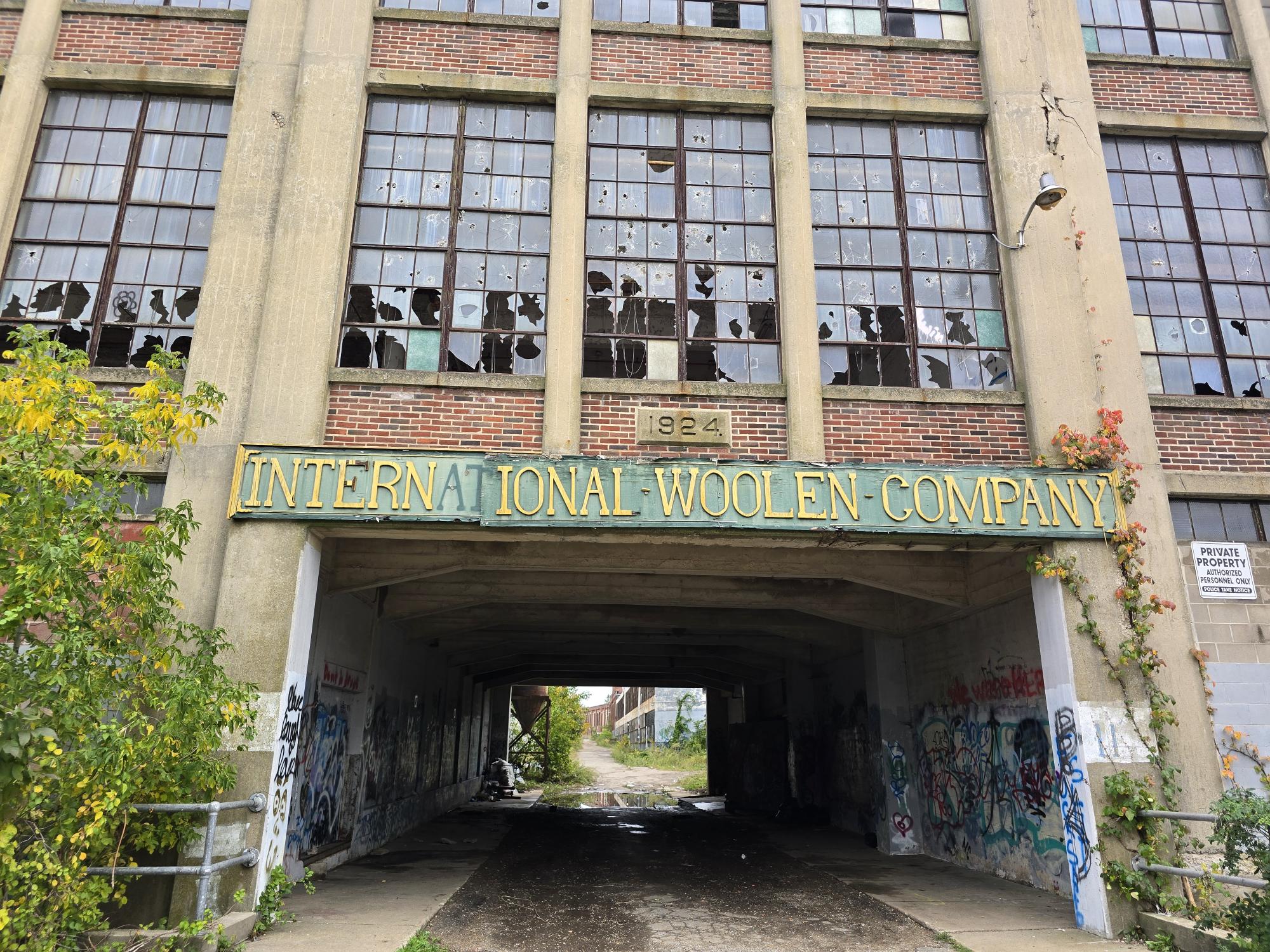
The International Woolen Mill remains one of the most complex and challenging properties in Sanford’s Historic Mill District. The large, vacant complex presents serious structural, environmental, fire and safety concerns, while unauthorized entry, trash and debris continue to impact the property and surrounding area.
As work continues to address these conditions, it is important to understand the City’s role, the limits of its authority over the property and the efforts currently underway.
Understanding the City’s Role
The International Woolen Mill is a privately-owned property. Although the Sanford City Council declared the property abandoned pursuant to State law, that declarationContinue reading
The International Woolen Mill remains one of the most complex and challenging properties in Sanford’s Historic Mill District. The large, vacant complex presents serious structural, environmental, fire and safety concerns, while unauthorized entry, trash and debris continue to impact the property and surrounding area.
As work continues to address these conditions, it is important to understand the City’s role, the limits of its authority over the property and the efforts currently underway.
Understanding the City’s Role
The International Woolen Mill is a privately-owned property. Although the Sanford City Council declared the property abandoned pursuant to State law, that declaration did not transfer ownership of the property to the City.
The abandoned property declaration is a legal tool that gives the City additional authority to address certain conditions at the property, including enforcing criminal trespass. It does not make the City responsible for the ongoing maintenance, security, cleanup or care of the privately-owned complex.
The City has spent more than $25,000 attempting to secure the facility due to the significant public safety concerns it presents. Despite these efforts, barriers, doors and other security measures have repeatedly been breached.
The City continues to use its enforcement authority to address unauthorized entry. On September 29, 2026, the Sanford Police Department conducted an operation within the complex that resulted in 13 individuals being cited for criminal trespass. Police have since established an ongoing response due to the serious dangers associated with entering and occupying the deteriorating structure.
Ultimately, the abandoned property declaration gives the City additional tools to address public safety concerns at the International Woolen Mill, but responsibility for the private property does not shift to the City.
Cleanup Efforts in the Surrounding Area
The City continues to address conditions in public areas surrounding the mill, including nearby Heritage Crossing. Public Works crews have repeatedly removed trash and debris from the Mill Yard and surrounding areas.
While some debris has been associated with individuals experiencing homelessness, City staff have also documented substantial illegal dumping by others using the area as an informal disposal site. The City will continue targeted cleanup and enforcement where appropriate, but repeated cleanup efforts cost tax payer dollars and cannot provide a permanent solution to conditions on private property.
Evaluating Long-Term Options
The City is currently working with outside agencies and other partners to identify potential long-term options for the property.
Following the September 29 enforcement operation, City officials joined representatives from the Environmental Protection Agency Region 1, the Maine Department of Environmental Protection, the State of Maine Land Bank Authority, environmental professionals and private development interests for an extensive tour and assessment of the complex.
The assessment confirmed that the significant environmental, structural and public-safety challenges associated with the property have no single or simple solution, and are of a scale and complexity beyond the City’s capacity to handle alone.
Environmental remediation, selective removal, potential reuse and other approaches remain possible, given collaboration with partners. Complete demolition may ultimately be considered, but the extraordinary scale and cost could make it one of the most difficult options to finance.
The City will continue working to bring together Federal, State, municipal and private resources to address different aspects of the property over time.
Boiler House Project Moving Forward
One significant piece of work to address this property is already underway at the former International Woolen Mill Boiler House.
The City has secured approximately $5 million in Federal EPA funding to demolish the former Boiler House, remediate environmental contamination and preserve structural elements necessary to support Pioneer Avenue, including the retaining wall. The project will also create additional space for future parking and other uses in the Mill District.
TRC, the City’s environmental consultant, is completing engineering and environmental work. Environmental permitting has been obtained, geotechnical work for the Pioneer Avenue retaining wall has been completed, and State Historic Preservation authorization remains pending.
The City anticipates issuing bid documents in November 2026, with demolition anticipated to begin in April 2027.
The Boiler House project represents a tangible step toward addressing one portion of the larger challenges associated with the International Woolen Mill.
-
Topic 2: Understanding Road Reconstruction
Share Topic 2: Understanding Road Reconstruction on Facebook Share Topic 2: Understanding Road Reconstruction on X (formerly Twitter) Share Topic 2: Understanding Road Reconstruction on Linkedin Email Topic 2: Understanding Road Reconstruction link
When a road needs work, it may seem simple: identify the roads in the worst condition and fix them. In reality, roadway improvements are part of a much larger process, with a variety of factors contributing to how projects are planned, prioritized, and completed.
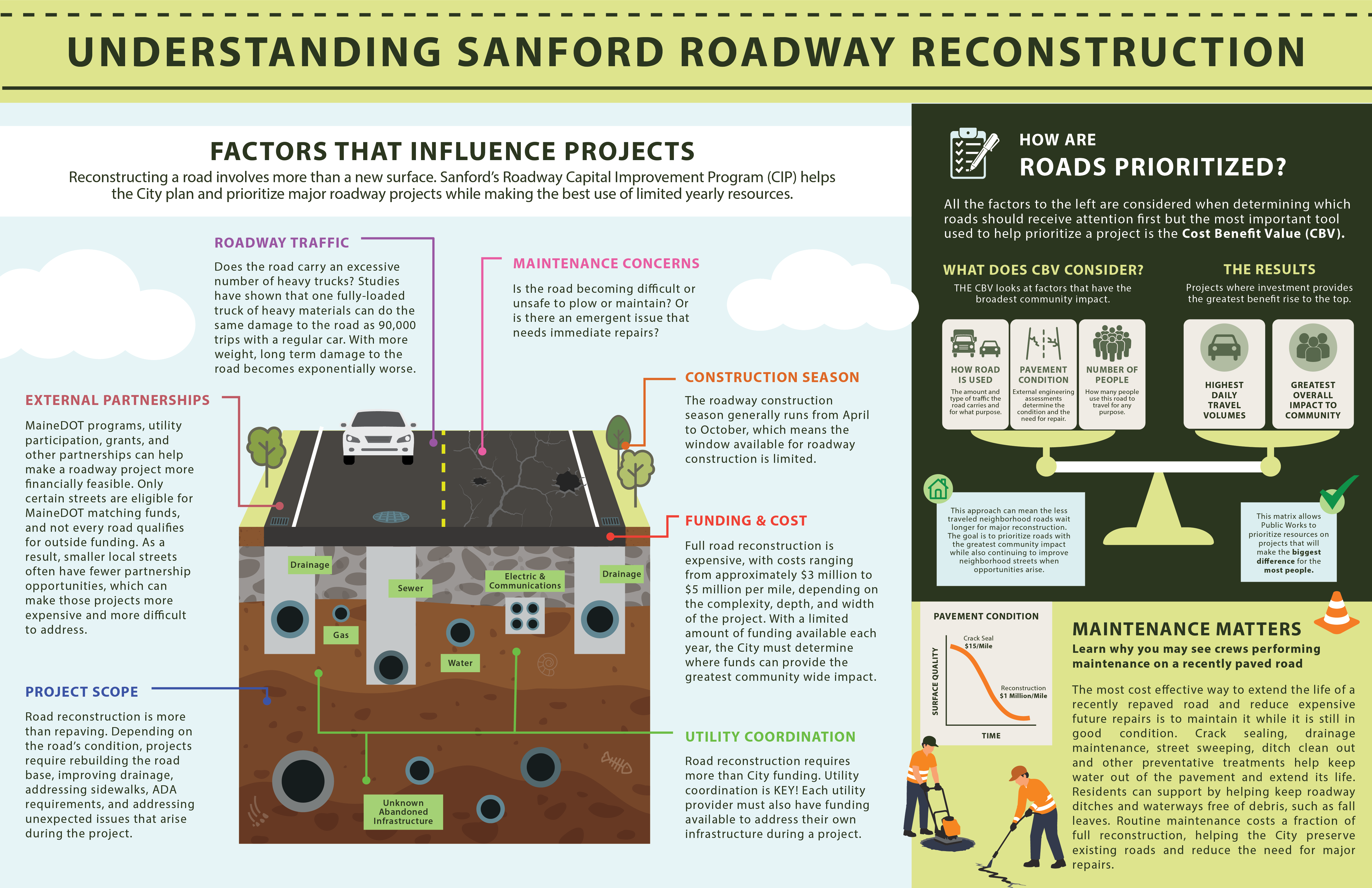
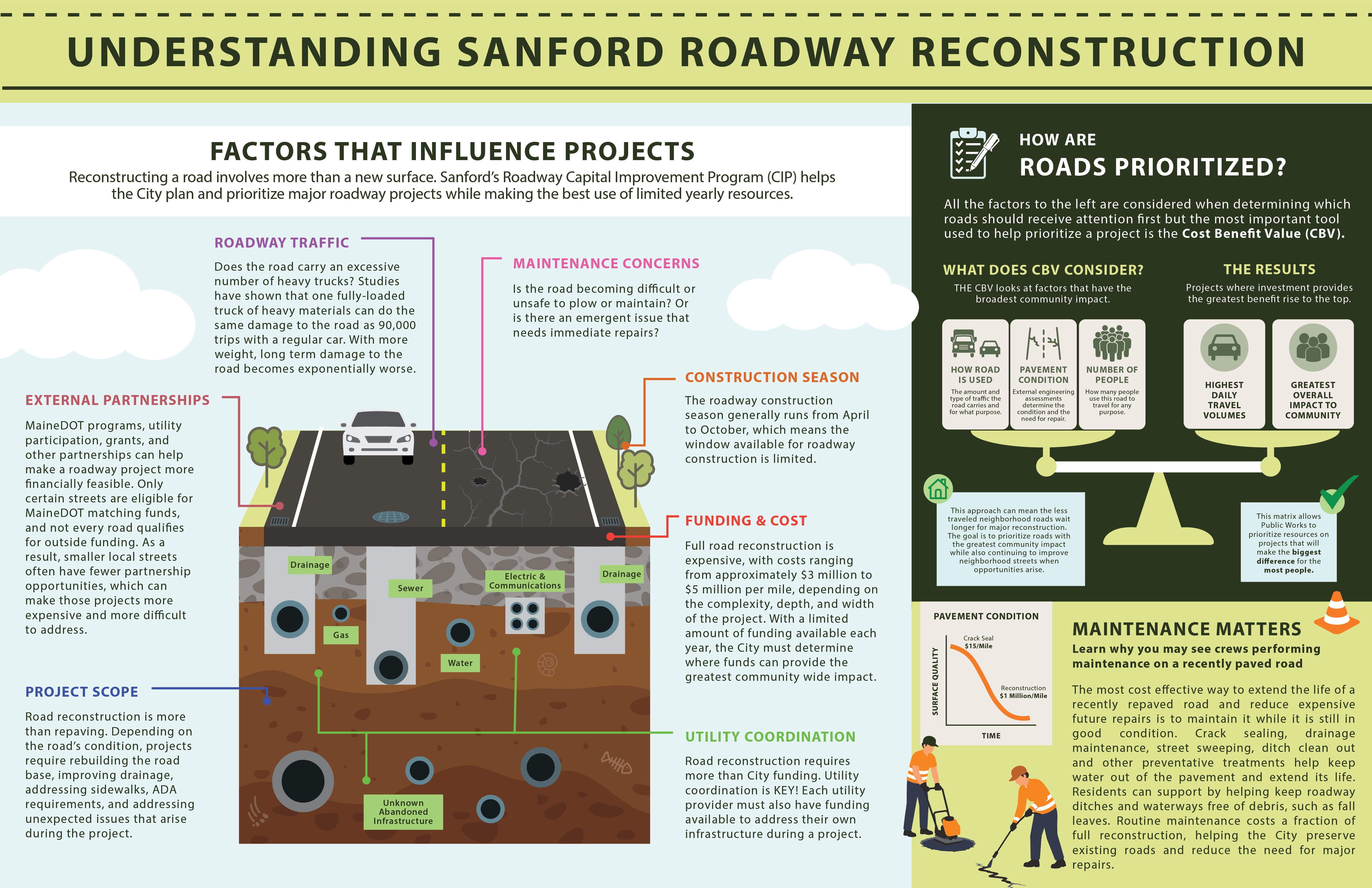
The graphic below takes a closer look at how the City plans and prioritizes major roadway projects through the Roadway Capital Improvement Program (CIP). It explains the factors that go into determining when and how a roadway project moves forward, including roadway condition, Cost Benefit Value (CBV), traffic volume, project costs, and available funding. The graphicContinue reading
When a road needs work, it may seem simple: identify the roads in the worst condition and fix them. In reality, roadway improvements are part of a much larger process, with a variety of factors contributing to how projects are planned, prioritized, and completed.
The graphic below takes a closer look at how the City plans and prioritizes major roadway projects through the Roadway Capital Improvement Program (CIP). It explains the factors that go into determining when and how a roadway project moves forward, including roadway condition, Cost Benefit Value (CBV), traffic volume, project costs, and available funding. The graphic also highlights the importance of maintaining roads while they are still in good condition to help extend their lifespan and reduce the need for costly reconstruction.
(Click on Image Above to View in a Larger PDF Format)
Public Works Capital Improvement Program
For the City of Sanford, roadway improvements are managed through the Roadway Capital Improvement Program (CIP), which helps the City plan and prioritize major roadway projects over several years. To help guide future projects, the Public Works team maintains a list of streets in need of attention. This list is updated periodically as road conditions, priorities, and funding opportunities change.
What Factors Contribute to a Road Reconstruction Project?
Unfortunately, a road being in poor condition does not automatically mean it will be the next road reconstructed. There are many factors that contribute to when and how a roadway reconstruction project can move forward.
- Construction season is one consideration. In Maine, the roadway construction season generally runs from April to October, which means the window available for roadway construction is limited.
- Funding is another major factor. Road reconstruction is expensive, with costs ranging from approximately $3 million to $5 million per mile, depending on the complexity, depth, and breadth of the project. With a limited amount of funding available each year, the City must determine where those dollars can have the greatest impact.
- Additional external funding through MaineDOT programs, utility participation, grants, and other partnerships can help make a roadway project financially feasible. However, only certain streets are eligible for MaineDOT matching funds, and not every road qualifies for outside funding. As a result, smaller local streets often have fewer partnership opportunities, which can make those projects more expensive and more difficult to address.
- The scope of the project also plays a role. Road reconstruction is much more than putting down new pavement. Some underlying road bases date back many years and were designed for much lighter vehicles and traffic than roads experience today. Depending on the condition, a project may require rebuilding the road base, improving drainage, addressing sidewalks or ADA requirements, and coordinating with utilities; not simply replacing a layer of pavement.
- Utility coordination is a very important part of the process. Sewer, water, gas, and communications providers may need to address their own infrastructure before or during a roadway project. This means each individual entity needs to have the necessary funding and plans in place for the project to move forward in-step with the City.
To help facilitate this process, the Public Works Department holds a monthly utility coordination meeting to discuss both short- and long-term plans with sewer, water, gas, and other overhead utility partners. The goal is to coordinate projects whenever possible and avoid reconstructing a road only to have it opened again shortly afterward for utility work. To this end, the City locally enforces a State law of a 5-year pavement moratorium on all full reconstruction and a 3-year moratorium on thick overlays. A roadway moratorium prevents the road from being excavated unless it is an emergency, and if it is an emergency, requires the pavement repair to extend twenty feet beyond the nearest edge in all pertinent directions.
All of these factors contribute to how a roadway project is planned, prioritized, and scheduled. While it may seem like a road can simply be selected and reconstructed, the process requires significant planning, coordination, funding, and timing to ensure the investment provides a lasting benefit to the community.
How are Roads Prioritized?
Public Works considers a number of factors when determining which roads should receive attention. One important tool is the Cost Benefit Value (CBV), which considers the benefit of investing in a particular road based on factors such as its pavement condition, how the road is used, and the number of people it serves. The City performs a Pavement Conditions Index Study every five to six years.
Other considerations include:
- Pavement condition: What condition is the road currently in, and how quickly is it deteriorating?
- Roadway traffic and loading: does the road carry an excessive number of heavy trucks? Studies have shown that one fully-loaded truck of heavy materials can do the same damage to the road as 90,000 trips with a regular car. With additional weight, damage to the road becomes exponentially worse.
- Year-round maintenance concerns: Is the road becoming difficult or unsafe to plow or maintain?
- Emergent needs: Has an unexpected issue created an immediate need for repairs?
- Partnership opportunities: Can the City leverage state, federal, utility, or other funding to make the project more affordable?
- Coordination with other projects: Are utilities or other agencies planning work in the same area?
All of these factors help determine where a project falls on the City’s list of roadway needs.
This approach can mean that smaller, less-traveled neighborhood roads may have to wait longer for major reconstruction than roads with higher travel volumes or greater community impact. The City recognizes the importance of maintaining these roads as well and has made limited targeted investments in recent years to address smaller-scale roadway repairs and improvements in neighborhoods throughout Sanford and Springvale.
The goal is to balance the need to address roads with the greatest overall community impact while also continuing to find opportunities to improve neighborhood streets throughout the City.
Residents can also play an important role by keeping City staff informed about what they are seeing on local roads. Reporting concerns and sharing information about roadway conditions helps Public Works better understand where maintenance issues may be developing. Residents can also attend City Council meetings, where citizens can speak during the public comment portion of the agenda and responsibly advocate for themselves and their neighbors.
My Road Was Just Repaved. Why Are You Already Doing Maintenance Work on It?
One of the best ways to extend the life of a road and reduce the need for expensive repairs as it ages is to maintain the road while it is still in good condition.
Crack sealing, roadside ditching, clearing overhead shade trees, drainage maintenance, street sweeping, and other preventative treatments can extend the life of a road and help prevent water from getting into the pavement.
The difference in cost can be significant. Routine maintenance costs a fraction of what full reconstruction can cost. Investing in preventative maintenance helps the City extend the life of existing roads and reduce the frequency of major reconstruction projects. In other words, maintaining a good road today can help prevent the need for a much more expensive reconstruction tomorrow.
-
Topic 1: Understanding Municipal Services
Share Topic 1: Understanding Municipal Services on Facebook Share Topic 1: Understanding Municipal Services on X (formerly Twitter) Share Topic 1: Understanding Municipal Services on Linkedin Email Topic 1: Understanding Municipal Services link
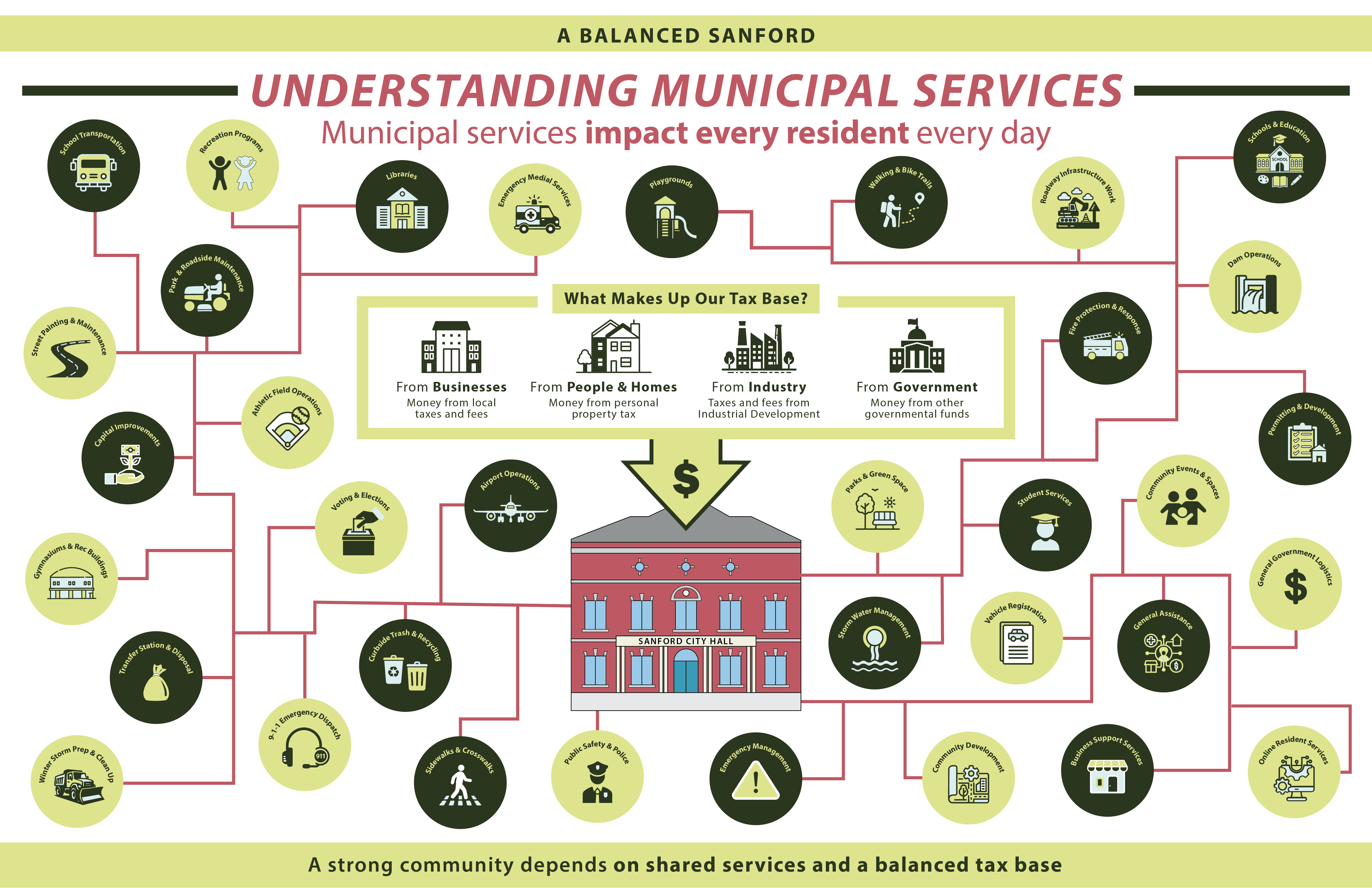
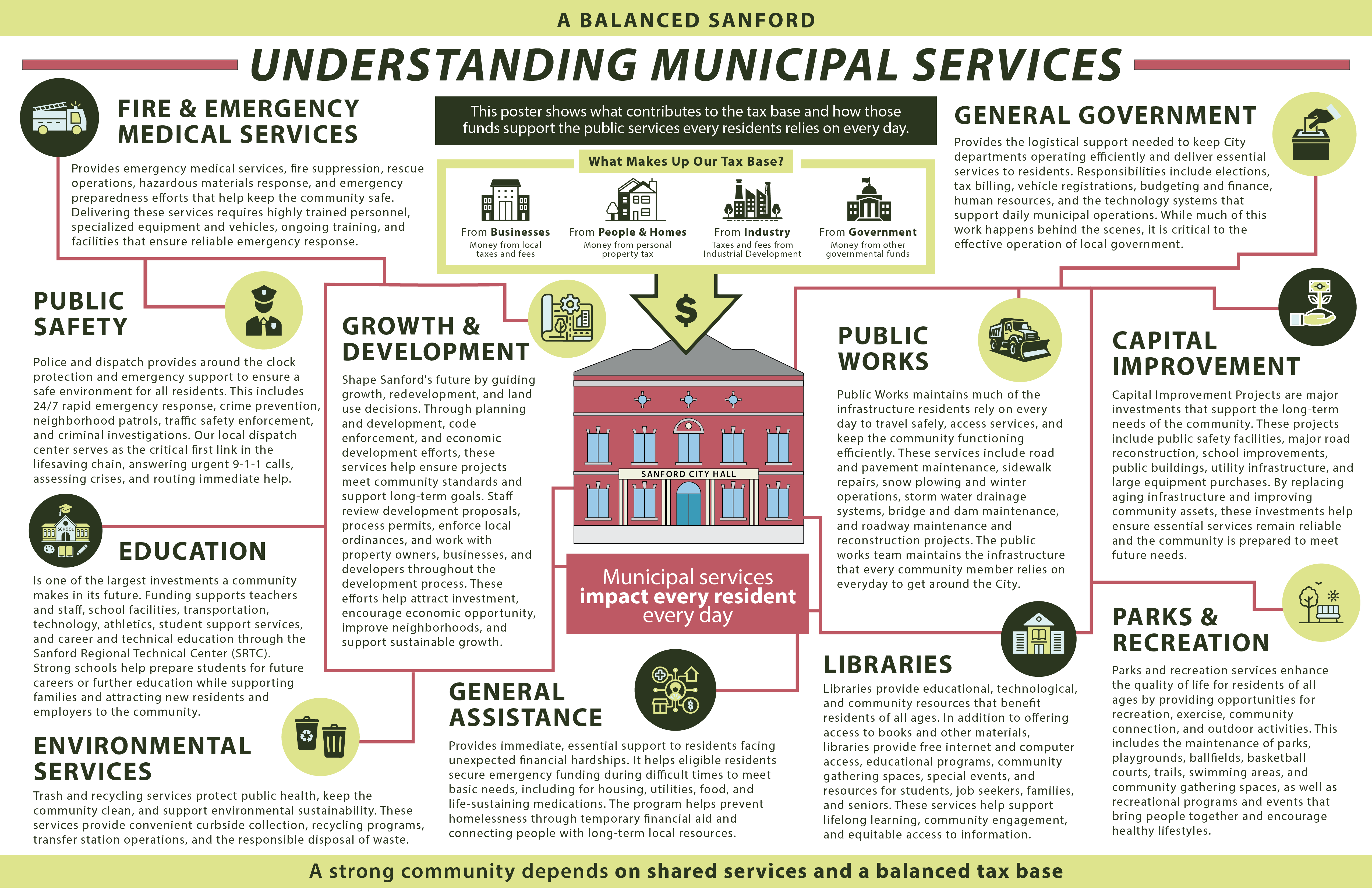
Every day, residents rely on dozens of municipal services, many of which happen behind the scenes. From emergency response and road maintenance to parks, schools, libraries, and community planning, these services work together to keep Sanford safe, functional, and a great place to live.Providing these services requires ongoing investment in employees, equipment, facilities, infrastructure, and technology. As the community grows and the cost of delivering services increases, the resources needed to maintain the level of service residents expect also grows.
The graphic and information below highlights many of the services supported through municipal funding and demonstrates how tax revenue isContinue reading
Every day, residents rely on dozens of municipal services, many of which happen behind the scenes. From emergency response and road maintenance to parks, schools, libraries, and community planning, these services work together to keep Sanford safe, functional, and a great place to live.Providing these services requires ongoing investment in employees, equipment, facilities, infrastructure, and technology. As the community grows and the cost of delivering services increases, the resources needed to maintain the level of service residents expect also grows.
The graphic and information below highlights many of the services supported through municipal funding and demonstrates how tax revenue is used to support the everyday operations that residents depend on. Understanding the range of services local government provides is an important first step in understanding how communities plan for the future, make financial decisions, and build a balanced, sustainable tax base.
(Click on Image Above to View in a Larger PDF Format)
Fire & Emergency Medical Services
Sanford Fire & EMS provides fire suppression, emergency medical care, rescue operations, hazardous materials response, emergency preparedness, and public safety education. Delivering these services requires highly trained personnel, specialized vehicles and equipment, protective gear, modern emergency facilities, and ongoing certification and training to ensure rapid, reliable emergency response when residents need it most.
Public Safety
The Sanford Police Department, Sanford Regional Communications Center, and Emergency Management Agency work together to protect residents and respond to emergencies 24 hours a day. Their responsibilities include emergency dispatch, patrol services, criminal investigations, traffic safety, emergency preparedness, and crisis response. These services rely on trained personnel, advanced communications technology, specialized equipment, and continuous professional training.
Education
Education is one of the community's largest public investments. Strong schools prepare students for future careers and higher education while supporting families and attracting new residents and employers. Funding supports teachers and staff, school facilities, transportation, classroom technology, athletics, career and technical education, extracurricular activities, and student support services.
Environmental Services
Solid waste and recycling services protect public health, keep the community clean, and support environmental sustainability. These services include curbside trash and recycling collection, transfer station operations, proper disposal of waste materials, recycling programs, and compliance with environmental regulations.
Growth & Development
Planning and development services help guide Sanford's future by managing growth, reviewing development proposals, administering permits, enforcing local ordinances, and supporting economic development. These efforts help ensure new development meets community standards while encouraging investment, improving neighborhoods, protecting community character, and supporting long-term economic growth.
General Assistance
General Assistance provides temporary support to eligible residents experiencing financial hardship. The program helps meet basic needs such as housing, utilities, food, and essential medications while connecting individuals and families with additional local and state resources that promote long-term stability.
Public Works
Public Works maintains the infrastructure residents rely on every day. Responsibilities include maintaining roads, sidewalks, bridges, dams, traffic signals, stormwater systems, and municipal vehicles, as well as managing snow and ice operations, roadway reconstruction projects, and transfer station operations. These services help ensure residents can travel safely and that essential infrastructure remains reliable.
General Government
General Government provides the administrative support necessary for every City department to operate effectively. Responsibilities include elections, tax billing, vehicle registrations, budgeting and finance, human resources, information technology, customer service, and record management. While much of this work happens behind the scenes, it is essential to delivering municipal services efficiently.
Capital Improvements
Capital Improvement Projects are major investments that repair, replace, or construct public infrastructure and facilities that serve the community for decades. These projects include fire stations, roads, bridges, public buildings, utility infrastructure, parks, and major equipment purchases that help maintain reliable public services and prepare Sanford for future needs.
Sanford Airport
Sanford Seacoast Regional Airport is an important community asset that supports business growth, aviation services, and regional transportation. The airport strengthens the local economy by attracting investment, supporting employers, creating jobs, and providing transportation connections for businesses and visitors.
Libraries
Sanford's libraries provide educational, technological, and cultural resources that benefit residents of all ages. In addition to books and other lending materials, they offer public computers and internet access, educational programming, community gathering spaces, resources for students and job seekers, lifelong learning opportunities, and programs for children, teens, adults, and seniors.
Parks & Recreation
Parks and recreation services enhance Sanford's quality of life by providing opportunities for recreation, wellness, and community engagement. The City maintains parks, playgrounds, athletic fields, trails, and other recreational facilities while offering programs, special events, and activities that encourage healthy lifestyles and bring the community together.